 English
 العربية
 Русский
 Français
 Español
 বাংলা
বাংলা
 Kiswahili
 Deutsch
 中文
中文
 日本語
日本語
 हिंदी
हिंदी

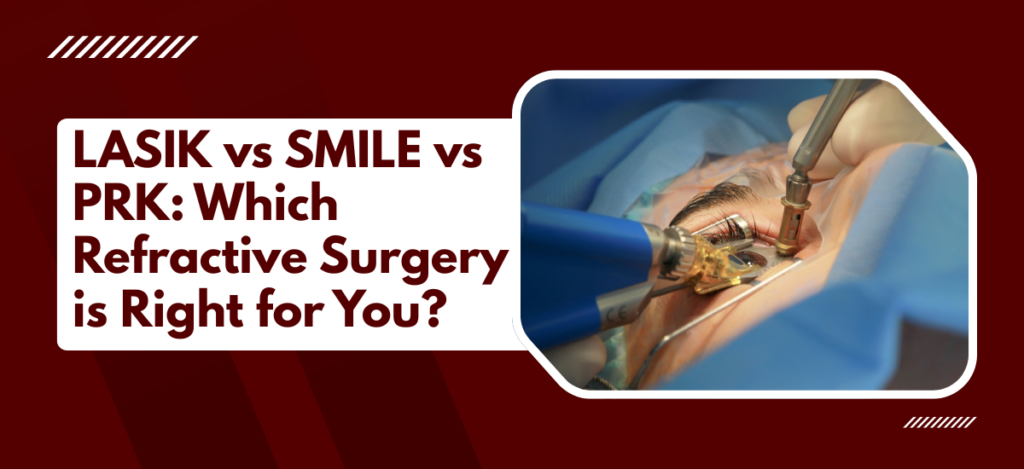
SPECTACLE REMOVAL (LASIK) vs SMILE vs PRK: Which Refractive Surgery Is Right for You?
Refractive surgery has transformed the way people correct vision problems such as nearsightedness, farsightedness, and astigmatism. Procedures like SPECTACLE REMOVAL (LASIK), SMILE, and PRK offer long-term vision correction and reduce dependence on glasses or contact lenses. With advances in laser technology, these treatments are safer, more precise, and widely accessible to patients seeking better vision.
In India, many patients choose advanced ophthalmology centers where experienced specialists perform these procedures using modern technology. At Claritas Eye and Retina Institute, a trusted Eye Hospital in Delhi, patients receive comprehensive evaluation and personalized treatment plans for vision correction and other eye conditions.
“Every patient’s eyes are different. The best refractive surgery is the one that matches the individual’s eye structure, lifestyle, and visual needs.”
What Is Refractive Surgery?
Refractive surgery has transformed the way people correct vision problems such as nearsightedness, farsightedness, and astigmatism. Procedures like SPECTACLE REMOVAL (LASIK), SMILE, and PRK offer long-term vision correction and reduce dependence on glasses or contact lenses. With advances in laser technology, these treatments are safer, more precise, and widely accessible to patients seeking better vision.
In India, many patients choose advanced ophthalmology centers where experienced specialists perform these procedures using modern technology. At Claritas Eye and Retina Institute, a trusted Eye Hospital in Delhi, patients receive comprehensive evaluation and personalized treatment plans for vision correction and other eye conditions.
“Every patient’s eyes are different. The best refractive surgery is the one that matches the individual’s eye structure, lifestyle, and visual needs.”
1. SPECTACLE REMOVAL (LASIK)
SPECTACLE REMOVAL (LASIK) is one of the most widely performed vision correction procedures in the world. During the surgery, a thin flap is created on the cornea, and a laser reshapes the underlying tissue to improve vision.
SPECTACLE REMOVAL (LASIK) Advantages
- Fastest recovery — most patients achieve clear vision within 24–48 hours
- Minimal discomfort during and after the procedure
- 30+ year proven global safety and efficacy track record
2. SMILE (Small Incision Lenticule Extraction)
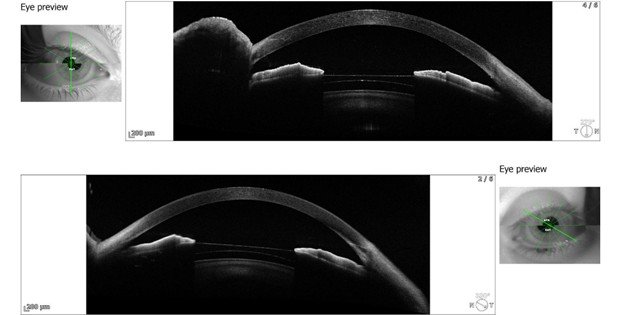
SMILE is a newer, minimally invasive refractive surgery technique. Instead of creating a corneal flap, a femtosecond laser creates a small disc-shaped piece of tissue inside the cornea, which is removed through a tiny incision. SMILE is particularly effective for treating moderate to high myopia.
SMILE Advantages
- Flapless — zero risk of flap dislodgement or flap-related complications
- Significantly lower post-operative dry eye compared to LASIK
- Preserves greater corneal structural strength
- Smallest incision means less disruption to corneal nerves
3. PRK (Photorefractive Keratectomy)
PRK is one of the earliest laser vision correction procedures and is still widely used today. In this technique, the outer layer of the cornea is gently removed before the laser reshapes the corneal tissue. Although recovery may take slightly longer, PRK provides excellent long-term vision outcomes.
PRK Advantages
- No flap — suitable for patients with thin or irregularly shaped corneas
- Long-term visual outcomes equivalent to LASIK and SMILE
- Lower dry eye risk than LASIK
- Safest option for patients with specific corneal conditions
LASIK vs SMILE vs PRK: Side-by-Side Comparison
Feature | LASIK | SMILE | PRK |
Procedure Type | Laser with corneal flap | Minimally invasive small incision | Surface laser procedure |
Best For | Mild to moderate vision errors | Moderate to high myopia | Thin corneas |
Recovery Time | 1–2 days | 2–3 days | 1–2 weeks |
Dry Eye Risk | Moderate | Lower | Lower |
Surgical Incision | Corneal flap | Small incision | No flap |
Each procedure has unique benefits, which is why a thorough eye examination is essential before choosing the right treatment.
Want to know which procedure is right for your eyes? Book a consultation with Dr. Mayank Bansal
Want to know which procedure is right for your eyes? Book a consultation with Dr. Mayank Bansal
How Dr. Mayank Bansal Evaluates the Right Surgery for You?
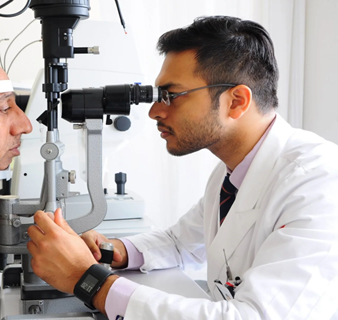
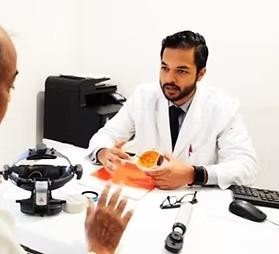
Choosing the right refractive surgery requires a detailed and personalized evaluation. At Claritas Eye and Retina Institute, Dr. Mayank Bansal conducts a comprehensive eye assessment to determine which procedure—SPECTACLE REMOVAL (LASIK), SMILE, or PRK, is most suitable for each patient. As an experienced specialist at a trusted Eye Hospital in Delhi, he focuses on both safety and long-term visual outcomes.
During the consultation, several important factors are carefully evaluated:
- Corneal Thickness and Shape Advanced corneal mapping and topography are used to assess whether the cornea is suitable for SPECTACLE REMOVAL (LASIK), SMILE, or PRK.
- Degree of Refractive Error The level of myopia, hyperopia, or astigmatism helps determine which procedure will provide the most accurate vision correction.
- Overall Eye Health Conditions such as dry eye syndrome, corneal irregularities, or other eye diseases are examined before recommending surgery.
- Lifestyle and Profession Certain procedures may be more suitable for people involved in sports, physically demanding jobs, or extensive screen use.
- Patient Expectations and Vision Goals Dr. Bansal discusses the patient’s expectations, recovery timeline, and long-term vision goals before finalizing the treatment plan.
What to Expect During Recovery
Recovery varies slightly depending on the type of refractive surgery performed.
SPECTACLE REMOVAL (LASIK) Recovery
- Vision improves within 24–48 hours
- Mild dryness or irritation may occur temporarily
- Most patients return to normal activities quickly
SMILE Recovery
- Slightly longer visual stabilization than LASIK
- Minimal discomfort due to small incision
- Quick return to routine activities
PRK Recovery
- Initial healing takes several days
- Vision gradually improves over a few weeks
- Long-term results are comparable to LASIK
Following your surgeon’s post-operative instructions and attending follow-up visits is essential for optimal healing and vision results.
Why Choose Claritas Eye and Retina Institute?
Selecting the right hospital is just as important as choosing the right procedure.
Claritas Eye and Retina Institute is recognized for providing advanced ophthalmic care with a patient-focused approach.
Experienced Specialists
The institute is led by Dr. Mayank Bansal, an experienced ophthalmologist specializing in refractive procedures, cataract surgery, and advanced retinal treatments.
Advanced Technology
Modern diagnostic systems and precision laser technology help deliver safe and accurate results.
Comprehensive Eye Care
In addition to refractive surgery, the hospital provides advanced treatments including Retina Surgery in Delhi and Cataract Surgery in Delhi.
Trusted Eye Care Destination
As a reputed Eye Hospital in India, Claritas offers high-quality care for patients seeking both routine and specialized eye treatments.
Conclusion
Refractive surgery offers a safe and effective way to achieve clearer vision and reduce dependence on glasses or contact lenses. While SPECTACLE REMOVAL (LASIK), SMILE, and PRK all aim to correct vision, the best procedure depends on your eye condition, lifestyle, and medical history. There is no single ‘best’ procedure for everyone.
What matters most is a thorough pre-operative evaluation by an experienced, ethical ophthalmologist who puts your vision health above all else. At Claritas Eye & Retina Institute, Dr. Mayank Bansal combines world-class diagnostic technology with decades of surgical expertise to match every patient with the safest, most effective procedure available.
Ready to see life without glasses? Book your refractive surgery evaluation at Claritas today
FAQs
1. How long does refractive surgery take?
2. How soon can I return to work after SPECTACLE REMOVAL (LASIK) or SMILE?
3. Is SPECTACLE REMOVAL (LASIK) surgery safe in India?
4. What are the possible side effects of refractive surgery?
5. At what age can someone undergo refractive surgery?
Disclaimer:
The information shared in this content is for educational purposes and not for promotional use.