
 English
 العربية
 Русский
 Français
 Español
 বাংলা
বাংলা Kiswahili
 Deutsch
 中文
中文 日本語
日本語 हिंदी
हिंदी
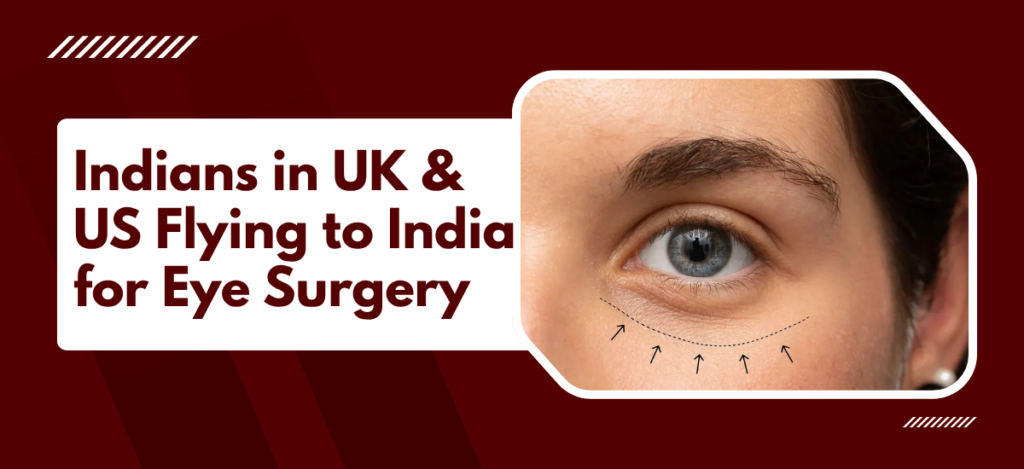
NRI patients from the UK and US are returning to India for cataract surgery and retinal procedures, saving 60% to 80% compared to out-of-pocket costs abroad, while bypassing NHS waiting lists that now regularly stretch beyond 12 months. The trend is concentrated among adults over 50 with bilateral cataracts, progressive blurring in low light, difficulty reading fine print, or glare sensitivity that worsens with oncoming headlights at night.
According to Dr. Mayank Bansal, a leading eye hospital in India specialist, “Patients arriving from the UK typically present with cataracts that have been on a watchful waiting protocol for over a year, and by the time they reach us the lens opacity has progressed to a stage where both eyes need surgical attention.”
Why Are NRIs Choosing to Come Back to India for Eye Surgery?
The drivers are specific and financial, clinical, and logistical all at once, not just a vague preference for home.
- Cost gap: Cataract surgery under general NHS waiting lists carries no direct fee but the indirect cost of delayed vision, lost productivity, and driving restrictions adds up fast, and private UK or US out-of-pocket costs for premium lens cataract procedures run 10 to 15 times the equivalent fee at a specialist centre in India.
- Lens choice: Trifocal and extended depth-of-focus intraocular lenses that eliminate the need for glasses after surgery are routinely implanted here at a fraction of what US private insurers charge as an upgrade, and NHS standard practice still defaults to monofocal lenses for most patients regardless of preference.
- Wait vs. fly: A return trip to India, surgery, and a ten-day recovery still costs less in total, including flights and accommodation, than a single privately booked bilateral cataract procedure at a London ophthalmology clinic.
- Surgeon continuity: NRI patients meeting the same surgeon pre-operatively, intra-operatively, and at follow-up within a single trip is the norm here, and that’s a different experience from what a typical NHS referral pathway or US ambulatory surgical centre usually provides.
And the numbers have compounded over the last five years as NHS ophthalmology backlogs widened post-pandemic. If you’ve been deferring because of cost or access, a consultation for cataract surgery will give you a clear surgical timeline within 48 hours.
What Should UK and US Patients Actually Plan For Before Flying?
Most of the practical questions come down to timing, documentation, and what happens when you’re back home for aftercare.
- Pre-op scans: Biometry and macular OCT are done within 24 hours of arrival at the treating centre, so there’s no need to source these from a GP or optometrist back home before flying, and having scans taken on the same equipment the surgeon uses gives the most precise lens power calculation.
- Surgery-to-flight gap: A seven-to-ten-day minimum between cataract surgery and a long-haul return flight is the standard recommendation, and bilateral cases with both eyes done in the same trip need at least five days between the first and second eye.
- Post-op drops abroad: The steroid and antibiotic drop regimen runs four to six weeks, and a written prescription in INN format from the treating surgeon is accepted at UK and US pharmacies without re-consultation.
- Insurance documentation: Many UK private health insurers and US HSA accounts accept receipts from accredited Indian hospitals for reimbursement claims, so collecting itemised invoices and procedure codes before departure is worth doing before you fly home.
Our blog on cataract surgery for international patients covers the full pre-trip checklist in detail.
Why Choose Claritas Eye & Retina Institute?
Dr. Mayank Bansal holds an MD from AIIMS, an FRCS (Glasgow), and a FACS (USA), has performed over 10,000 eye surgeries across cataract and complex vitreoretinal cases, and trained at the Stein Eye Institute at UCLA specifically in retinal surgery, which gives him an unusual depth of diagnostic coverage for NRI patients who arrive with layered pathology across cataract and macular disease simultaneously.
What patients consistently mention is that they got a direct answer about surgical options in the first consultation, not a referral chain, and several have returned with family members specifically because the pre-operative explanation was detailed enough to make them comfortable flying thousands of miles for an elective procedure.
 Call +91 8178519983 to book your consultation.