Macular Degeneration Treatment in Delhi
Home > Service Detail
Macular Degeneration Treatment in Delhi
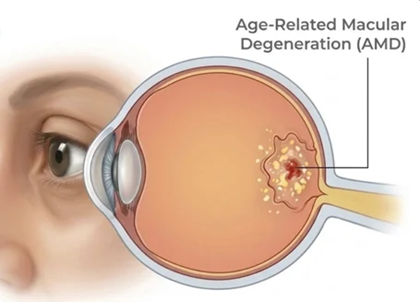
Macular degeneration is a progressive retinal condition that gradually erodes central vision, making everyday tasks like reading, recognising faces, and driving increasingly difficult. Age-related macular degeneration (AMD) is today one of the leading causes of severe vision loss in adults over 50 and early, precise intervention can make all the difference.
At Claritas Eye & Retina Institute, a trusted Eye Hospital in Delhi, we offer state-of-the-art diagnostic imaging, anti-VEGF therapy, and advanced retina surgery tailored to each patient’s stage of AMD. Whether you are dealing with dry or wet macular degeneration, our approach combines global best practices with compassionate, one-on-one care.
Dr. Mayank Bansal says:
“Macular degeneration is not a sentence to blindness — it is a call to act early. With the imaging tools and treatment protocols we have today, most patients can preserve meaningful vision if they seek care in time. The key is not to wait and see.”
Understanding Macular Degeneration
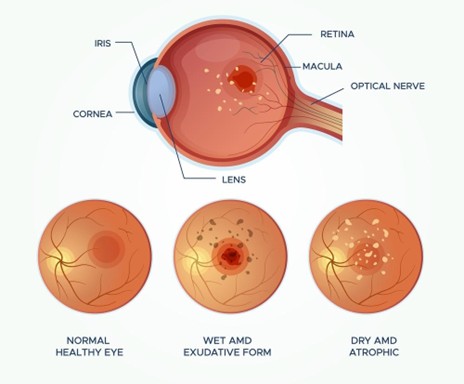
The macula is the small, central region of the retina responsible for sharp, detailed vision. Macular degeneration occurs when this area deteriorates — primarily due to ageing, genetics, or lifestyle factors.
There are two main forms:
Dry AMD (Atrophic)
The most common form, accounting for about 90% of AMD cases. Tiny yellow deposits (drusen) form under the macula, causing gradual thinning and blurring of central vision over months to years.
Wet AMD (Neovascular)
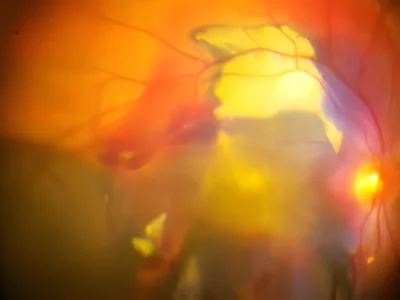
Less common but more aggressive. Abnormal blood vessels grow beneath the macula and leak fluid, causing rapid central vision loss. Anti-VEGF injections are the gold-standard treatment.
Common Symptoms
Blurred or distorted central vision, straight lines appearing wavy (metamorphopsia), a dark or empty spot at the centre of vision, and difficulty reading fine print or recognising faces.
Treatment Options Available at Claritas Eye & Retina Institute
Our retina team at this specialist Eye Hospital in Delhi customises every treatment plan based on the type, stage, and progression of AMD. Below is an overview of the treatments available:
Treatment | Best For | Key Benefit |
Anti-VEGF Intravitreal Injections | Wet AMD (active neovascularisation) | Halts abnormal vessel growth, reduces macular fluid, stabilises or improves vision |
Laser Photocoagulation | Extrafoveal wet AMD lesions | Seals leaking blood vessels to prevent further central vision loss |
AREDS2 Nutritional Supplementation | Intermediate to advanced dry AMD | Clinically proven to slow progression in high-risk patients |
Micro-Incision Vitrectomy Surgery | Sub retinal bleed/ advanced AMD complications | Sutureless, minimally invasive; faster recovery with precise retinal repair |
OCT-Guided Monitoring | All AMD stages (dry & wet) | High-resolution retinal imaging to detect progression before symptoms worsen |
All Retina Surgery in Delhi at Claritas Eye & Retina Institute is performed using the latest 25-gauge micro-incision vitrectomy systems, ensuring minimal discomfort and faster visual recovery.
Types of Anti-VEGF Intravitreal Injections at Claritas Eye & Retina Institute
Anti-VEGF injections work by blocking the protein (vascular endothelial growth factor) responsible for the growth of abnormal blood vessels in wet AMD. At Claritas, we offer all major clinically approved anti-VEGF agents, and Dr. Mayank Bansal selects the most appropriate one based on your disease activity, treatment history, and individual response.
1. Ranibizumab
(Lucentis · Accentrix · Razumab · Ranizurel)
Ranibizumab is a monoclonal antibody fragment specifically designed for intraocular use. It has the longest clinical evidence base for wet AMD treatment and is available under multiple brand names at varying price points, making it accessible for a broader range of patients. Razumab is the first biosimilar approved in India and offers a cost-effective alternative without compromising efficacy.
2. Aflibercept
(Eylea Injection)
Aflibercept (Eylea) is a fusion protein that binds VEGF-A, VEGF-B, and placental growth factor — offering a broader mechanism of action compared to earlier agents. It typically requires fewer injections per year due to its longer duration of action, making it a preferred choice for patients seeking a more convenient treatment schedule without sacrificing visual outcomes.
3. Brolucizumab
(Pagenax Injection)
Brolucizumab (Pagenax) is a single-chain antibody fragment — the smallest anti-VEGF molecule currently available — which allows a higher molar concentration per injection. It offers extended dosing intervals of up to 12 weeks in stable patients and has demonstrated superior fluid reduction on OCT compared to some earlier agents, making it particularly effective for patients with persistent subretinal or intraretinal fluid.
4. Faricimab
(Vabysmo Injection)
Faricimab (Vabysmo) is the first bispecific antibody approved for eye conditions — it simultaneously targets both VEGF-A and Angiopoietin-2 (Ang-2), addressing two key pathways that drive vascular instability and leakage in wet AMD. It offers the potential for dosing intervals of up to 16 weeks in responding patients, significantly reducing the treatment burden for those managing AMD over the long term.
When Should You See a Retina Specialist?
Many patients with early macular degeneration are unaware of the condition because symptoms develop gradually. Do not delay consulting a specialist if you notice any of the following:
Blurred or hazy central vision
Straight lines appearing wavy or distorted
Dark or empty area in the centre of vision
Difficulty reading text even with glasses
Colours appearing less bright or washed out
Trouble recognising familiar faces
Sudden, rapid loss of central vision (wet AMD emergency)
Vision that differs significantly between both eyes
Our Diagnostic Process for AMD
Accurate staging is the foundation of effective AMD management. At Claritas Eye & Retina Institute, our diagnostic workup for Macular Degeneration in Delhi includes:
Optical Coherence Tomography (OCT)
High-resolution cross-sectional imaging of the retinal layers — the most important test for detecting and monitoring AMD, even before visible symptoms appear.
OCT-Angiography (OCTA)
Non-invasive imaging of retinal vasculature, ideal for identifying type 1 and type 2 neovascularisation in wet AMD without dye injection.
Fundus Fluorescein Angiography (FFA)
Dye-based imaging that maps leaking blood vessels in wet AMD, helping determine the exact location and extent of neovascular membranes before treatment.
Amsler Grid & Visual Field Testing
Simple, reproducible tests that track central vision distortion and blind spots over time, helping monitor treatment response between clinic visits.
Recovery and Aftercare
Recovery after macular degeneration treatment at Claritas Eye & Retina Institute is carefully managed to ensure the best possible outcomes. Whether you have received anti-VEGF injections, laser therapy, or retina surgery, our team provides detailed aftercare guidance tailored to your specific treatment plan.
After Anti-VEGF Injections
Most patients can return home on the same day. You may experience mild redness, a gritty sensation, or floaters for a day or two — this is normal. Prescribed antibiotic eye drops should be used as directed for 3–5 days. Avoid rubbing or pressing on the treated eye.
After Laser Therapy
Vision may be slightly blurred for a few hours following the procedure. Protective eyewear is recommended when outdoors. Avoid strenuous activity for 24 hours, and attend all scheduled follow-up appointments.
After Retina Surgery
Recovery typically takes several weeks. Head positioning instructions may be given depending on the type of surgery performed. Activity restrictions and follow-up visits are essential to ensure the retina heals correctly.
Regular OCT Monitoring
Follow-up OCT scans are scheduled to track disease activity and guide the timing of subsequent treatments. These appointments are critical — do not skip them.
Lifestyle & Nutrition
A diet rich in leafy greens, fish, and antioxidants supports retinal health. AREDS2 supplements are recommended for eligible patients to slow dry AMD progression.
UV Protection
Wearing UV-protective sunglasses outdoors helps reduce oxidative stress on the macula. This simple habit plays a meaningful role in long-term retinal health.
Smoking Cessation
Smoking significantly accelerates AMD progression. Quitting smoking is one of the most impactful steps patients can take to protect their remaining vision after treatment.
At Claritas Eye & Retina Institute, our commitment to your care does not end with the procedure. Dr. Mayank Bansal and our dedicated retina team remain available for post-treatment queries and provide a clear, personalised aftercare plan before you leave the clinic.
Why Choose Claritas Eye & Retina Institute for Macular Degeneration Treatment in Delhi?
With many eye hospitals in Delhi, choosing the right one for a complex retinal condition matters enormously. Here is what makes Claritas Eye & Retina Institute the preferred choice for patients across Delhi NCR and internationally:

International-Level Retina Expertise
Dr. Mayank Bansal trained at AIIMS and UCLA and holds fellowships from the UK Royal Colleges and American College of Surgeons — bringing global AMD treatment standards to Delhi.

Advanced OCT & OCTA Imaging
Our cutting-edge imaging technology ensures precise AMD staging, allowing treatment to begin only when clinically necessary and avoiding over-treatment.

Dedicated Retina & Vitreous Unit
Unlike general eye hospitals, Claritas Eye & Retina Institute is a super-specialist retina institute. Every protocol, tool, and team member is focused entirely on retinal conditions including macular degeneration.

Personalised Anti-VEGF Protocols
We use OCT-guided treat-and-extend protocols to minimise the number of injections while maximising visual outcomes for wet AMD patients.

Full-Spectrum Retina Surgery in Delhi
From anti-VEGF injections to 25G micro-incision vitrectomy for advanced AMD complications, all Retina Surgery in Delhi is performed in-house with state-of-the-art equipment.

Emergency Retina Care Available
Sudden vision loss from wet AMD requires immediate attention. Claritas Eye & Retina Institute provides urgent retina consultations for patients experiencing acute central vision changes.

Trusted by Patients from India & Abroad
Patients travel from the UK, USA, the Middle East, and across India for Macular Degeneration Treatment in Delhi at Claritas Eye & Retina Institute— a testament to the trust the institute has earned.

Transparent, Patient-First Approach
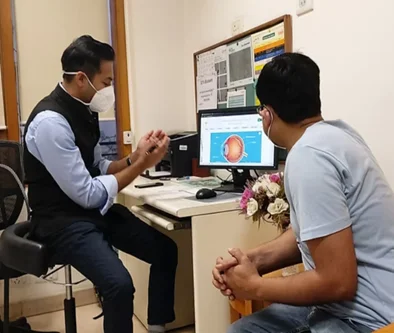
Dr. Bansal is known for thorough consultations — no rushed appointments, no unexplained costs, and full availability for post-treatment queries even after hours.
FAQs
1. Is macular degeneration treatable?
2. What treatments are available for macular degeneration in Delhi?
3. What are the symptoms of macular degeneration?
4. Who is at risk of macular degeneration?
5. Can macular degeneration cause complete blindness?
6. How long does macular degeneration treatment take?
7. Is macular degeneration treatment painful?
Disclaimer: The information shared in this content is for educational purposes and not for promotional use.
English
العربية
Русский
Français
Español
বাংলা
Kiswahili
Deutsch
中文
日本語
हिंदी