
 English
 العربية
 Русский
 Français
 Español
 বাংলা
বাংলা Kiswahili
 Deutsch
 中文
中文 日本語
日本語 हिंदी
हिंदी
Posterior Capsular Opacification After Cataract Surgery: Why Secondary Cataracts Happen and YAG Laser Treatment ?
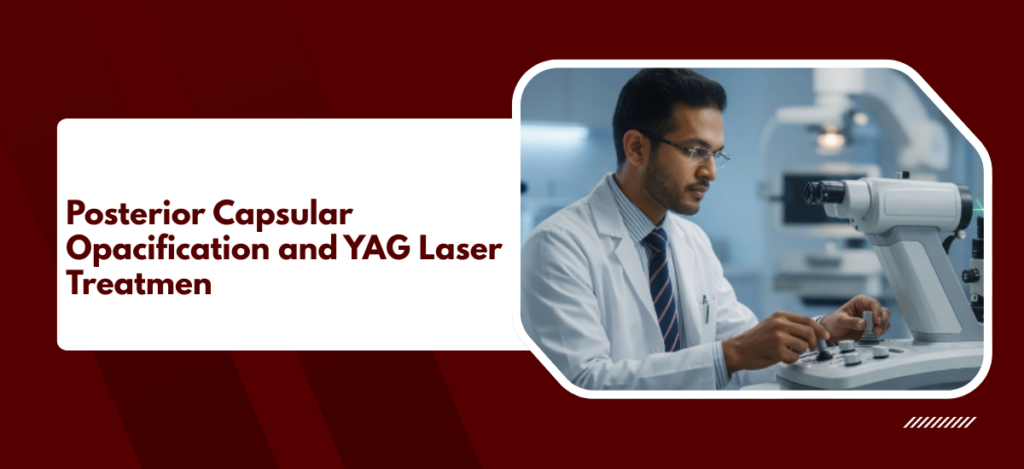
Posterior capsular opacification is the most common complication after cataract surgery, affecting up to 20 to 40 percent of patients within two years of phacoemulsification. During cataract surgery, the natural lens is removed but the thin posterior capsule that supports the IOL is left intact. Residual lens epithelial cells migrate across this capsule and proliferate, forming a cloudy membrane behind the IOL that progressively reduces vision. It is often called a secondary cataract, though it is not a recurrence of the original cataract. The capsule itself has changed, not the implanted lens.
According to Dr. Mayank Bansal, a leading cataract surgeon at the Best Eye Hospital in Delhi, “PCO is entirely treatable. YAG laser capsulotomy takes less than five minutes in the clinic, requires no incision, and restores the vision quality the patient had immediately after their cataract surgery.”
Why Does PCO Develop and Who Is at Risk?
PCO develops when lens epithelial cells left behind on the capsular rim after surgery migrate and proliferate across the posterior capsule surface. Several factors influence how quickly and severely this happens.
- Residual lens epithelial cells: Complete cortical cleanup during phacoemulsification reduces but does not eliminate the risk. Even meticulously performed surgery leaves a thin layer of cells at the capsular equator, and these are the source of subsequent migration.
- IOL material and edge design: Hydrophobic acrylic IOLs with a sharp posterior edge create a mechanical barrier that slows epithelial cell migration. Hydrophilic acrylic and PMMA lenses show higher PCO rates at two and five years, and edge design matters more than material in several published comparisons.
- Patient age: Younger patients develop PCO faster and more severely than older patients. Paediatric cataract patients have the highest rates of any age group, often developing dense opacification within weeks of surgery.
- Diabetes and uveitis: Chronic inflammation promotes faster epithelial cell proliferation. Patients with diabetic eye disease or a history of uveitis need closer post-operative monitoring for early PCO development.
- Multifocal and EDOF IOLs: Because these premium lenses are highly sensitive to optical clarity, even mild capsular haze produces disproportionate symptoms including halos, reduced contrast, and loss of intermediate clarity before standard acuity testing detects a change.
Mild haze may be visible on slit lamp examination before the patient notices any visual change, which is why structured one-year post-operative review remains useful. The decision to treat is symptom-driven and based on whether the opacification sits on the visual axis. For a full overview of the cataract surgery pathway and post-operative care.
How Is PCO Treated with YAG Laser Capsulotomy?
YAG laser capsulotomy is a non-invasive outpatient procedure that uses a neodymium-doped yttrium aluminium garnet laser to create a clear circular opening in the opacified posterior capsule. No incision is made and no anaesthetic injection is needed.
- Procedure steps: Dilating drops are instilled 20 to 30 minutes before the procedure. A contact lens is placed on the cornea for stabilisation. The YAG laser delivers a series of precisely focused pulses to disrupt the capsule membrane, creating a clear central aperture behind the IOL in 3 to 5 minutes.
- Immediate visual recovery: Most patients notice improved clarity within hours as the pupil returns to normal size. Some experience brief floaters from capsular debris, which settle within days.
- Intraocular pressure spike: IOP rises transiently in around 15 percent of patients in the hours after the procedure. Patients with pre-existing glaucoma or ocular hypertension need a pressure check one hour post-procedure and may require prophylactic IOP-lowering drops.
- IOL damage risk: The laser pulse carries a small risk of pitting the posterior IOL surface if the focal point is not set sufficiently posterior to the lens. Experienced technique and appropriate energy settings reduce this to less than 1 percent in published series.
- Retinal detachment: Disruption of the posterior capsule increases vitreous mobility and carries a low but real increased risk of retinal detachment, estimated at 0.5 to 1 percent over five years. Highly myopic patients and those with vitreoretinal history warrant fundus review before and after capsulotomy.
YAG capsulotomy at Claritas is priced at Rs 4,000 per eye a one-time, definitive treatment with no need for repeat procedures. For the complete procedure pricing schedule covering all laser and surgical treatments, read about YAG laser costs.
Why Choose Claritas Eye Hospital for Posterior Capsular Opacification?
Dr. Mayank Bansal is MD (AIIMS), FRCS (Glasgow), FACS, with over 15 years of cataract and anterior segment practice including more than 12,000 cataract procedures. Post-operative follow-up at Claritas includes a structured one-year review specifically to screen for PCO and other late complications before they progress to symptomatic vision loss. International patients receive complete post-operative documentation including YAG capsulotomy records formatted for handover to their treating ophthalmologist at home.
FAQ
PCO is not a recurrence of the cataract but a thickening of the thin capsule left behind after surgery, caused by residual lens epithelial cells migrating across the membrane. The implanted IOL itself is unaffected and does not need to be replaced.
PCO can develop as early as a few months post-operatively or as late as several years after surgery. The average onset with modern hydrophobic acrylic IOLs is 12 to 24 months, though younger patients and those with inflammatory conditions may develop it significantly earlier.
YAG laser capsulotomy is performed under topical anaesthesia with dilating drops only, and patients feel no pain during the procedure. Mild pressure from the contact lens used for stabilisation is common, and the entire treatment takes 3 to 5 minutes with immediate return home.
No. Once the posterior capsule is opened by YAG laser, the opacified membrane does not regenerate. A single YAG capsulotomy is the definitive treatment, and the vision improvement it produces is permanent in the absence of other ocular conditions.
*Disclaimer:* This blog is for educational and informational purposes only and should not be considered professional advice.