 English
 العربية
 Русский
 Français
 Español
 বাংলা
বাংলা Kiswahili
 Deutsch
 中文
中文 日本語
日本語 हिंदी
हिंदी

Refractive Surgery in Delhi — LASIK, ICL & SMILE at Claritas Eye & Retina Institute
Refractive errors such as myopia (nearsightedness), hyperopia (farsightedness), and astigmatism are among the most common vision problems today. Many individuals rely on glasses or contact lenses for years, often facing inconvenience in daily life. With advancements in ophthalmology, refractive surgery has emerged as a safe and effective solution for permanently correcting these vision issues.
Dr. Mayank Bansal, an eminent eye specialist in Delhi, highlights that modern refractive procedures are highly precise and customized, allowing patients to achieve clear vision with minimal downtime. He also emphasizes that careful evaluation and the right choice of procedure are key to achieving safe and optimal outcomes.
Claritas Eye & Retina Institute, led by Dr. Mayank Bansal, offers advanced refractive surgery in Delhi using the latest technology and personalized treatment planning. Dr. Bansal brings extensive expertise in vision correction procedures, including LASIK, SMILE, and ICL. His approach combines clinical precision with patient-specific needs, ensuring optimal visual results and long-term stability for those seeking freedom from glasses or contact lenses.
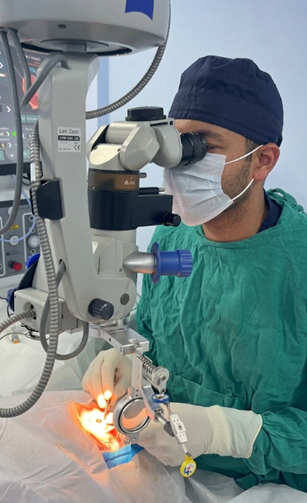
Not sure what refractive surgery actually does? Let’s break it down simply
What Is Refractive Surgery?
Refractive surgery is a procedure used to correct vision problems such as myopia, hyperopia, and astigmatism by reshaping the cornea or by placing a lens inside the eye. It helps improve how light focuses on the retina, reducing or eliminating the need for glasses or contact lenses. Modern techniques like LASIK, SMILE, and ICL are quick, precise, and designed for long-term vision correction.
Thinking about life without specs? Connect with an expert for clarity on your options.
Confused by the different procedures? Let’s explore the options available
Types of Refractive Surgery Offered at Claritas
At Claritas Eye Hospital in Delhi, we perform advanced refractive procedures tailored to various eye conditions and lifestyle needs. Each option is selected after a detailed evaluation to ensure safe and effective vision correction.
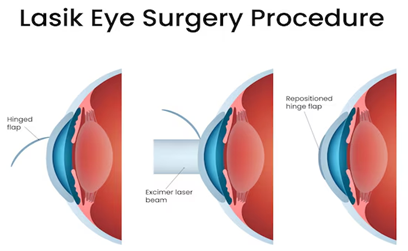
1. LASIK
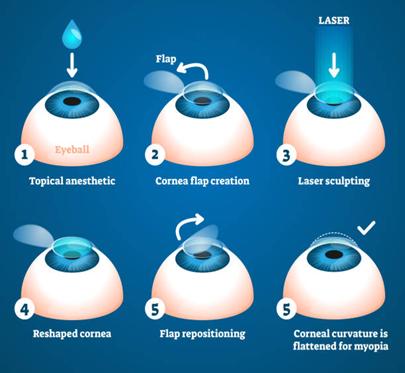
Involves using a laser to reshape the cornea and correct the patient’s vision, resulting in quick recovery and minimal discomfort.
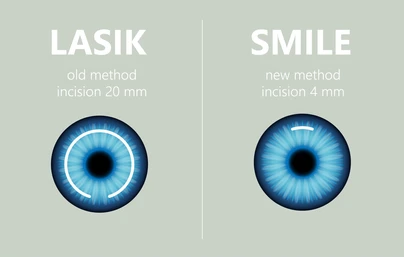
2. SMILE
A minimally invasive procedure performed through a small cut without flap creation to achieve faster healing of the treated area.
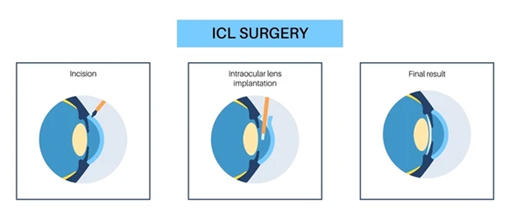
3. ICL (Implantable Collamer Lens)
This involves placing a lens inside the eye when laser treatment may not be suitable because of a thin cornea or high-power requirements.
4. PRK
A surface-based laser procedure recommended for patients with thinner corneas or specific clinical needs.
LASIK vs ICL vs SMILE — Which One Is Right for You?
Selection of LASIK, SMILE or ICL is based on individual eye problem, personal preference and vision requirements. All three have their own purposes and each is ideal for certain circumstances. Eye examination will help determine which one suits you the best.
LASIK:
Best suited for mild to moderate vision correction with adequate corneal thickness. Offers quick recovery and is widely preferred.
SMILE:
Most suitable for people with an active lifestyle who want a minimally invasive option. It also provides speedy recovery and less dryness.
ICL:
Recommended for high power or thin corneas where laser procedures may not be suitable. Does not involve corneal reshaping.
The right choice depends on factors like corneal health, prescription level, and long-term visual expectations.
Who Is a Good Candidate for Refractive Surgery?
The ideal candidate for refractive surgery is one who has stable, healthy eyes and correctable vision issues. The eligibility of the patient is determined through a detailed eye check-up to ensure whether this is a safe and effective procedure for him/her.
At least 18 years old, with stable vision for over 1 year
Adequate corneal thickness (for laser procedures like LASIK and SMILE)
Diagnosed with myopia, hyperopia and astigmatism
No active eye conditions such as infections, severe dry eye, or keratoconus
Generally good overall health with no uncontrolled medical conditions
Some individuals may not be ideal candidates such as those with unstable vision, certain eye conditions or specific health issues. In such cases, options like ICL may be considered.
How Is Refractive Surgery Performed at Claritas?
Many patients with early macular degeneration are unaware of the condition because symptoms develop gradually. Do not delay consulting a specialist if you notice any of the following:
1. Comprehensive Evaluation:
Detailed eye tests, including corneal mapping and vision analysis, are conducted under the supervision of Dr. Mayank Bansal to assess suitability.
2. Personalized Planning:
Dr. Bansal selects the most appropriate procedure (LASIK, SMILE, or ICL) based on individual eye health and lifestyle needs.
3. Preparation:
Numbing eye drops are applied to ensure a painless and comfortable experience.
4. Procedure:
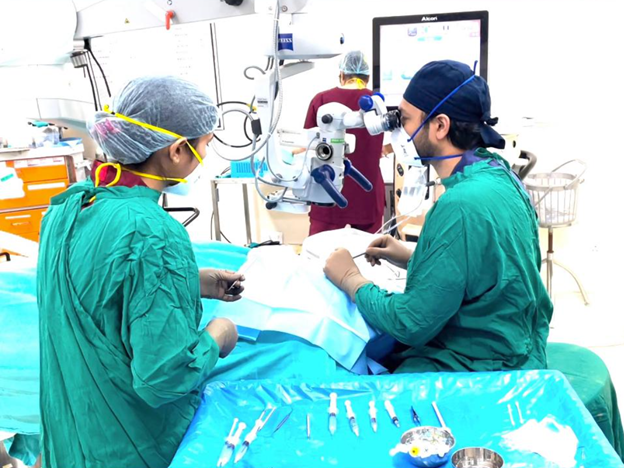
Dr. Bansal performs the surgery using advanced laser systems or lens implantation techniques, typically completed within 10–20 minutes.
5. Immediate Recovery:
Patients are observed briefly after the procedure and usually discharged the same day.
6. Post-Operative Care:
Dr. Mayank Bansal provides detailed recovery instructions, medications, and follow-up visits to ensure a smooth recovery.
Refractive Surgery Cost in Delhi
The cost of refractive surgery in Delhi varies depending on the type of procedure, the technology used, and the individual eye condition. Options like LASIK, SMILE, and ICL have different pricing ranges due to differences in technique and customization. Factors such as pre-surgery evaluation, surgeon expertise, and post-operative care also influence the overall cost.
At Claritas, a renowned eye hospital in Delhi, patients benefit from cutting-edge technology and experienced care, ensuring value and safety. Compared to global standards, refractive procedures in India are more cost-effective while maintaining high-quality outcomes.
Curious about the outcome? Let’s see what most patients experience
What Results Can You Expect After Refractive Surgery?
Refractive surgery improves vision by correcting how light focuses on the retina. Most patients notice significant improvement within a few days, often achieving 20/20 or near-normal vision depending on their condition.
- Reduced or complete freedom from glasses and contact lenses
- Sharper, clearer vision for daily activities
- Improved quality of life and convenience
- Long-lasting results with stable vision over time
- High success and patient satisfaction rates
While outcomes are highly predictable, results may vary slightly based on individual eye health and prescription level. Regular follow-ups help ensure stable and optimal vision.
Concerned about recovery time? Let’s understand the healing phase
Recovery After Refractive Surgery – What to Expect
Recovery after refractive surgery is usually quick, with most patients noticing clearer vision within 24–48 hours. However, complete healing and stabilization may take a few weeks, depending on the type of procedure performed.
First 24 hours:
Mild irritation, watering, or light sensitivity may occur
2–3 days:
Vision becomes clearer and more stable
1 week:
Most daily activities can be resumed comfortably
Few weeks:
Vision fully stabilizes with minimal fluctuations
Dr. Mayank Bansal advises patients to avoid rubbing their eyes, limit screen time initially, and take prescribed medications for smooth healing. Routine follow-ups help monitor recovery and ensure optimal results.

Looking for the right specialist for vision correction? Let’s understand what sets Dr. Bansal’s expertise apart.
Why Choose Dr. Mayank Bansal for Refractive Surgery in Delhi?

Proven Expertise:
Dr. Mayank Bansal, a leading ophthalmologist in Delhi, has extensive experience in performing advanced refractive procedures with consistent outcomes.

International Credentials:
Trained at globally recognized institutions, bringing international standards to refractive surgery in Delhi.

Precision Technology:
Uses advanced laser systems and diagnostics for accurate and safe vision correction.

Personalized Planning:
Dr. Mayank Bansal carefully evaluates each patient to recommend the most suitable procedure (LASIK, SMILE, or ICL).

Wide Range of Solutions:
Expertise in managing simple to complex refractive errors with multiple treatment options.

High Patient Satisfaction:
Proven track record of successful results and improved visual quality.
Want expert-led vision correction? Reach out to a specialist for personalized guidance and a well-informed approach.
FAQs
1. Will I completely stop using glasses after surgery?
2. What is the recovery time after refractive surgery?
3. Can both eyes be treated on the same day?
4. When can I drive after refractive surgery?
5. How soon will I see results after surgery?
Disclaimer: The information shared in this content is for educational purposes and not for promotional use.