
 English
 العربية
 Русский
 Français
 Español
 বাংলা
বাংলা Kiswahili
 Deutsch
 中文
中文 日本語
日本語 हिंदी
हिंदी
Delhi Retinal Surgery For Iraqi Patients
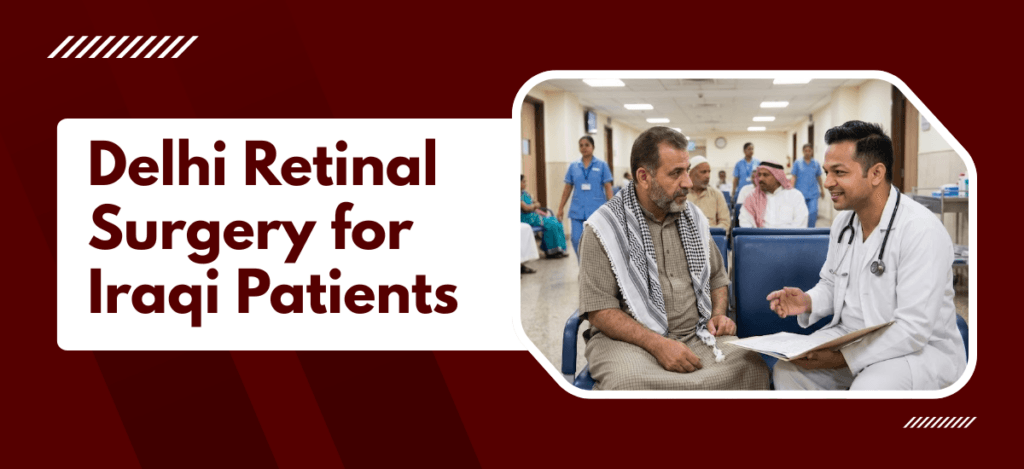
Iraqi and Middle Eastern patients choose Delhi for complex retinal surgery, including vitrectomy, retinal detachment repair, and diabetic retinopathy treatment, because the city brings together skilled vitreoretinal specialists, advanced surgical technology, and costs running 60 to 80 percent lower than the US or Europe. Three things drive the call. Clinical expertise in cases like macula-off detachment, proliferative diabetic retinopathy, and macular hole repair. Transparent pricing backed by a fast medical visa. And surgical volumes that sit among the highest in South Asia. Delhi centres rack up high weekly counts of vitrectomies and detachment repairs, and case volume tracks directly with retinal surgical outcomes. That’s the short version.
According to Dr. Mayank Bansal, Best Eye Hospital in Delhi, Most Iraqi patients who reach us for vitrectomy already have advanced pathology, so pre-operative imaging and case planning shape the visual outcome more than the surgical step itself.
What Makes Delhi a Preferred Destination for Retinal Surgery Among Middle Eastern Patients?
Delhi gives patients access to subspecialty retina surgeons, current operating platforms, and full international patient support that regional centres in Iraq and nearby countries don’t always deliver. The reasons split into clinical, logistical, and financial.
Surgeon depth: Vitreoretinal training in Delhi usually includes fellowships at AIIMS, UCLA, or Royal College institutions, so patients don’t end up with a general ophthalmologist handling complex repairs.
Cost: A complex vitrectomy priced at $8,000 to $15,000 in the US or Europe gets done in Delhi for a fraction of that, with no compromise on lens platforms, gas tamponade quality, or imaging hardware.
Equipment: Theatres run 25G and 27G vitrectomy systems, intraoperative OCT, and wide-angle viewing. Not luxury kit. It’s the line between a clean macular hole closure and a redo six months later.
Visa: India’s medical visa is short, multi-entry, and covers attendants, which clears a logistical headache most Iraqi families wrestle with elsewhere.
Volume matters more in retina than almost any other surgical field. Anyone weighing surgical options should also look into vitrectomy surgery before committing.
What Specific Retinal Conditions Do Iraqi Patients Travel to Delhi to Treat?
Most international referrals from Iraq and the Gulf involve conditions that need urgent or technically demanding intervention. Four account for the bulk of cases.
Diabetic retinopathy: Advanced proliferative cases bringing tractional detachment and vitreous haemorrhage, since diabetes rates in the region run high and patients often present late, which pushes the plan toward combined vitrectomy with membrane peeling rather than simple laser.
Retinal detachment: Many arrive with macula-off detachments where timing changes final acuity, and Delhi centres can schedule retinal detachment surgery within days rather than weeks.
Macular holes: Full-thickness holes needing ILM peeling and gas tamponade. Closure rates run high when the surgeon does these regularly.
Trauma: Penetrating injury, intraocular foreign bodies, post-traumatic detachment. All needing combined anterior and posterior segment expertise in one sitting.
So the case mix isn’t simple. Most need a surgeon who can adapt mid-procedure, and that’s what drives the referral pattern. For background on hole pathology and recovery, this guide on macular hole symptoms and surgery walks through it.
Why Choose Dr. Mayank Bansal?
Dr. Mayank Bansal is an MD (AIIMS), FRCS (Glasgow), and ICO Retina Fellow from UCLA with over 15 years handling complex vitreoretinal cases for patients from Iraq, the UK, France, Mauritius, and the USA. His clinical work in retinal genomics and ongoing research place him as a recognised referral surgeon, and the international patient pathway sits on the eye hospital in India page.
Iraqi patients at Claritas usually arrive with macula-off detachments or proliferative diabetic disease, and anatomical success gets measured case by case, never promised in advance. No two retinas behave alike. That’s how this field works.
FAQ
How long should an Iraqi patient plan to stay in Delhi for retinal surgery?
Around 10 to 14 days, depending on procedure and gas tamponade needs.
Is a medical visa difficult to obtain for retinal surgery in India?
No, India’s medical visa gets processed quickly and covers two attendants.
Can post-operative follow-up happen remotely after returning to Iraq?
Yes, video consultations handle most routine follow-ups once initial healing is confirmed.
What language support is available for Arabic-speaking patients?
Arabic-speaking coordinators assist with consultation, paperwork, and recovery instructions.