
 English
 العربية
 Русский
 Français
 Español
 বাংলা
বাংলা Kiswahili
 Deutsch
 中文
中文 日本語
日本語 हिंदी
हिंदी
Flying after retinal detachment surgery
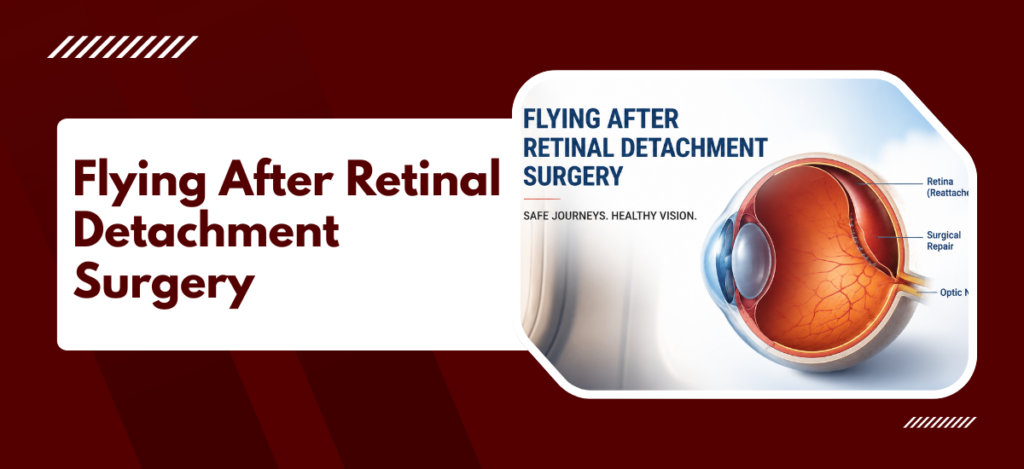
After retinal detachment surgery, patients can typically fly within 3 to 4 weeks, depending on the intraocular tamponade used. An expansible gas bubble (SF6 or C3F8) contraindicates air travel for 2 to 8 weeks, as reduced cabin pressure causes bubble expansion and a rise in intraocular pressure that may result in permanent vision loss. Silicone oil does not expand with altitude and permits earlier travel. Scleral buckle without gas generally allows flying within 1 to 2 weeks. SF6 absorbs within 10 to 14 days; C3F8 may persist for 6 to 8 weeks. Clearance should be based on confirmed bubble dissipation via slit-lamp or ultrasound, not a fixed calendar timeline.
According to Dr. Mayank Bansal, Best Eye Hospital in Delhi, Gas inside the eye behaves like any trapped gas at altitude. It expands. And expansion inside a closed eye doesn’t end well, so we wait for confirmed dissipation on examination, not on a calendar.
Why Does the Gas Bubble Make Flying Dangerous?
Intraocular gas reacts directly to atmospheric pressure changes during ascent. Even cabin-pressurised flights drop ambient pressure enough to cause measurable expansion.
Tamponade Type | Dissipation Period | Earliest Safe Flight Window | Risk Level at Altitude |
SF6 Gas | 10 to 14 days | 2 to 3 weeks post-surgery | High until cleared |
C3F8 Gas | 6 to 8 weeks | 8 to 12 weeks post-surgery | Very high, longest wait |
Silicone Oil | Removed surgically later | 1 week post-surgery | Low, no expansion |
Scleral Buckle (no gas) | Not applicable | 1 to 2 weeks post-surgery | Minimal |
Expansion: A small remaining bubble can double in volume during a flight, pushing intraocular pressure well past safe limits and cutting off blood supply to the retina and optic nerve.
Pain: Sudden pressure spikes inside the eye produce severe pain that doesn’t ease with descent, and patients often report it within minutes of takeoff.
Vision loss: is the worst outcome, occurring when the central retinal artery gets occluded by the pressure surge, sometimes permanently within a single flight.
Type matters: because SF6 clears in roughly 2 weeks, C3F8 can linger up to 8 weeks, and complex cases may need up to 12 weeks before vitrectomy surgery clearance for flight.
The bubble must be confirmed gone through slit-lamp or ultrasound exam before any flight is cleared.
How Should Overseas Patients Plan Their Travel Window?
International patients need a different recovery strategy because they can’t simply drive home. Planning starts before the surgery itself.
Extended stay: Patients flying in from the UK, USA, Middle East, or Africa should budget for a minimum three to four week stay post-surgery if gas tamponade is anticipated, and longer for C3F8 cases.
Oil option: lets some patients fly home within days because silicone oil endotamponade doesn’t expand at altitude, though a second surgery for oil removal is needed later.
Ground transport: Trains and most road routes below 1000 feet elevation stay safe even with gas in the eye, useful for patients who must move between cities during recovery.
Final clearance: is given only after a documented exam confirming complete bubble dissipation, and many surgeons issue a written fit-to-fly certificate that airlines may request at check-in.
Post-operative follow-up at one week, two weeks, and four weeks helps track the bubble and lock in the actual flight date. For more on what international patients should verify before treatment, see our guide on eye surgery safety in India for British and US patients.
Why Choose Dr. Mayank Bansal?
Dr. Mayank Bansal is an AIIMS-trained vitreoretinal surgeon with FRCS (Glasgow), FACS, and an ICO Retina Fellowship from UCLA, bringing over 15 years of clinical experience in complex retinal detachment repair. His international patient protocol includes pre-surgery gas-versus-oil planning specifically built around return travel dates, a service refined through cases from the Dr. Mayank Bansal practice across UK, USA, France, Mauritius, and Iraq.
Patients receive documented bubble-clearance evaluations and fit-to-fly certification before discharge, with follow-up scheduling that fits their travel itinerary instead of forcing them to extend stays without reason.
FAQ
How long after retinal detachment surgery can I fly?
Typically 3 to 4 weeks, but gas bubble cases may need 2 to 12 weeks.
Is silicone oil safer than gas for international patients?
Yes, oil doesn’t expand at altitude so flying is permitted much earlier.
Can pressurised cabins prevent gas bubble expansion?
No, cabin altitude still drops enough pressure to cause dangerous bubble expansion.
What happens if I fly too soon after retinal surgery?
Severe eye pain, intraocular pressure spike, and possible permanent vision loss can occur.